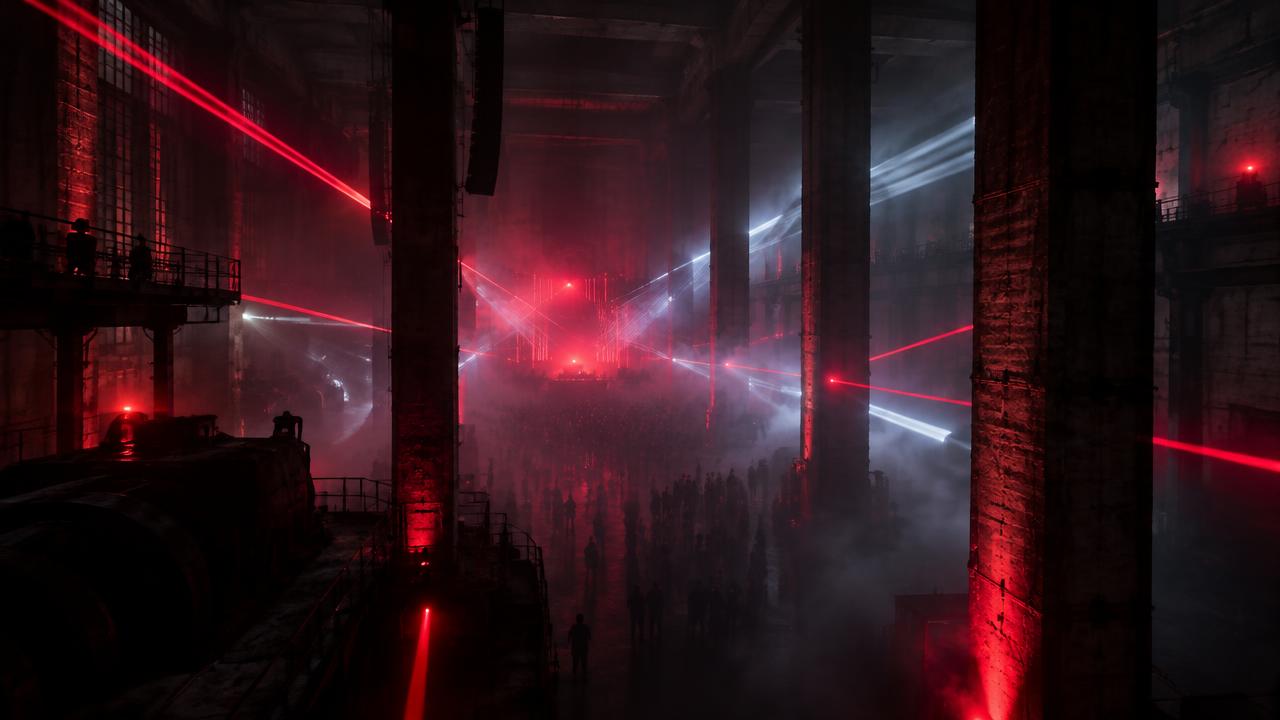
Example image, illustration. Not a photo of a real party.
On Saturdays, people from all over the world queue outside Berghain, often waiting three to four hours, and a large portion of them will not get in. Set in a former power plant on the border between Friedrichshain and Kreuzberg, this venue is much more than a dance club. It is an ongoing experiment in how much personal freedom a space can sustain when it is strictly protected.
This guide explains Berghain's origins, why the door policy works the way it does, what the strict photo ban really means, and which rules apply inside. Finally, it addresses the question many ask afterward: where can you find this level of openness without waiting three hours in line?
From Bunker to Power Plant: How Berghain Came to Be
Its roots date back to the 1990s. Back then, Berlin's gay and fetish scene gathered under the banner Snax, initially in an old bunker on Friedrichstraße, and from 1998 onwards at Club Ostgut in a warehouse near the old Ostbahnhof. Following Ostgut's demolition in 2004, founders Norbert Thormann and Michael Teufele moved the concept, along with the adjacent Lab.oratory, into the decommissioned heating plant near Wriezener Bahnhof to create Berghain. The name combines Friedrichshain and Kreuzberg. In 2016, a German tax court officially designated the club as a cultural institution, granting it the same fiscal status as a classical concert hall.
Why the Door Policy Is So Strict
The door is not a fashion contest; it is crowd management. With a capacity of around 1,500 and demand vastly exceeding space, the door staff curates who will carry and respect the energy of the room. They read behavior: small groups pass much easier than large squads, calm composure in line helps, and loud tourist antics are an immediate dealbreaker. Anyone who seems to be there just to tick off a bucket list item often telegraphs that unintentionally. Scene insiders estimate that one-third to one-half of those in line get turned away on weekends. There are no secret tricks, though trying again on Sunday morning often yields better results.
Photo Ban: Why Nobody Films Inside
Smartphones and cameras must remain packed away inside Berghain. The strict no-photo policy protects the guests rather than the myth: anyone letting loose on this dancefloor does not want to end up on social media. Furthermore, the club rarely speaks to the press and releases almost no internal imagery. This black-box approach means you cannot preview the club anywhere and must rely on descriptions. That is precisely why this guide outlines what to expect.
Sex-Positive, But Music First
Berghain emerged from the gay fetish scene, offering darkrooms for intimacy and a physical openness that few other clubs embrace so radically. Even so, it is not a kinky party in the conventional sense. The dancefloor remains the core focus, the music is the primary draw, and many guests are simply there to dance for hours. Those seeking more will find dedicated rooms for it. Those who wish to dance and leave can do just that. Mutual consent is the fundamental rule.
Practical Tips: Hours, Getting There, and Payment
Doors typically open from Thursday to Monday morning, with the flagship Klubnacht running continuously from Saturday night into Monday. Fridays often only open one floor, while Sunday morning offers a quieter entry window. You can reach the club via Ostbahnhof or Warschauer Straße. Admission fees are not published online. While cash used to be the only option, guests report that card payments are now accepted as well. Allow plenty of time for the queue, and always keep a backup plan in mind if you are rejected.
What You Can Learn From the Myth
The real magic of Berghain lies not in its door policy, but in the safe container created behind it. Because photography is banned, because selection happens before entry, and because ground rules are clear, people can genuinely let go. Applying this principle to nightlife delivers a refreshing experience: vetted beforehand, liberated on the night. That is the exact philosophy behind our events.